
For a school estates team, a monthly electricity bill gives a total. It rarely explains which systems used the energy, when demand increased or what continued running after pupils and staff left. More granular monitoring helps the team investigate those questions and build evidence for its energy plan.
The purpose of this private school installation
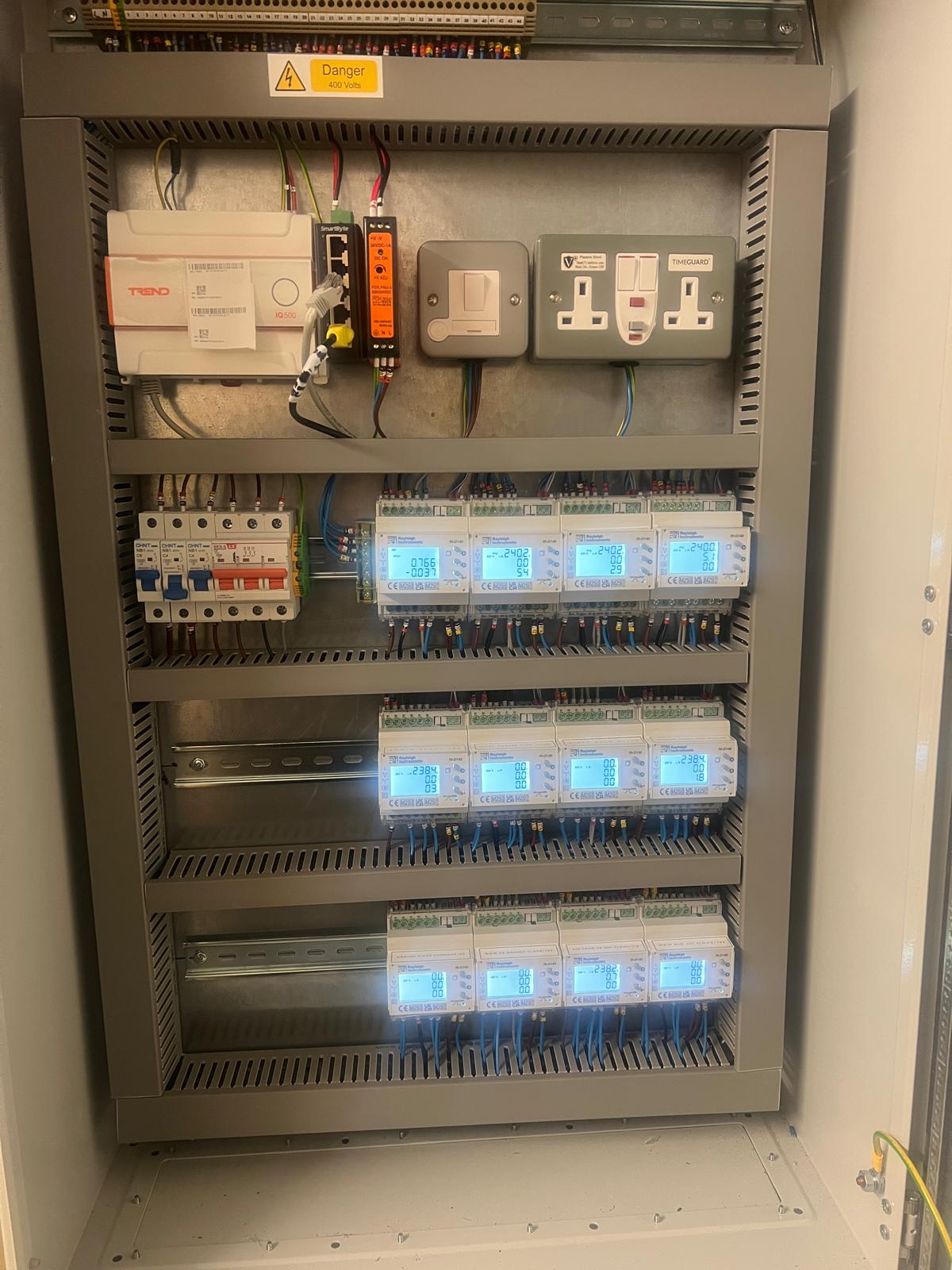
The installation shown below was carried out at a private school to provide more detailed electricity consumption data for reporting and to support its net zero planning. The photographs document the metering and installation work. The school is not identified, and no verified energy, cost or carbon savings are claimed.
What half-hourly electricity data can reveal
Half-hourly records show how electricity consumption changes through the day. Comparing teaching hours, evenings, weekends and holidays can highlight periods that need investigation. Essential systems may operate continuously, so an overnight load should not automatically be labelled waste.
Whole-building data establishes the overall pattern. Submetering can add detail at selected distribution boards or significant loads, helping the estates team narrow an investigation to an area or system. The metering plan should follow the questions the school needs to answer.
Validate the readings before drawing conclusions
Useful analysis depends on the installation and configuration. Checks include CT ratios and orientation, phase association, meter settings, timestamps and communications. Missing records, resets and estimated values should be identified. Heating and ventilation schedules, occupancy and known site events provide context for a change in demand.
Build a report the estates team can act on
- Define the reporting period, monitored areas and data coverage.
- Show electricity consumption in kWh and distinguish it from demand in kW.
- Compare occupied and unoccupied periods on a consistent basis.
- List exceptions, possible explanations and checks for the site team.
- Assign actions and review the evidence after a change.
Cost estimates need the applicable tariff and time bands. Carbon calculations need documented conversion factors and a clear reporting boundary. Electricity monitoring supports a wider decarbonisation plan; it does not establish a complete organisational carbon footprint on its own.
A practical starting point for your school
Start with available bills and interval data, operating hours, a list of existing meters and the questions your estates team wants to answer. Review the existing information before specifying additional hardware. Agree data ownership, access, reporting outputs and who will investigate findings.
Explore our commercial energy monitoring and EMS approach, BMS integration services or discuss a school monitoring scope. Email hello@ecotech-integration.co.uk or call 0800 046 1078.